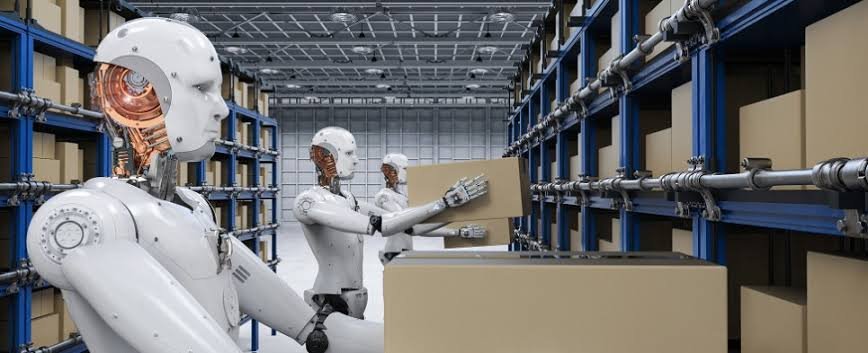

Artificial intelligence in warehouse robotics integrates sensing, planning, and control to enable autonomous, reliable operations. Perception builds spatial maps and detects anomalies; planning and scheduling optimize dynamic decisions; actuation converts plans into precise motion for picking, sorting, and stacking. Predictive maintenance and real-time data fusion support safety and uptime. These systems must align with ROI, compliance, and scalable performance, presenting measurable gains yet occasional tradeoffs. The interplay across sensing, planning, and control invites further examination of real-world impact.
What AI Methods Power Warehouse Robotics
To power warehouse robotics, a combination of AI methods is employed to perceive, reason, and act within dynamic environments. Robot perception integrates computer vision, sensor fusion, and localization to map spaces and detect anomalies.
Reasoning employs planning, scheduling, and anomaly detection for robust decision-making. Actuation translates plans into motion, while predictive maintenance monitors health to ensure continuous operation.
How AI Improves Picking, Sorting, and Stacking
AI enhances picking, sorting, and stacking by integrating perception, decision-making, and motion to handle varied items with high accuracy. Systems coordinate grasp planning, path optimization, and payload stability, reducing manual intervention. Performance metrics emphasize reliability and throughput.
Challenges include handoff latency and calibration drift, which affect synchronization between sensors and controllers, demanding robust calibration protocols and drift-compensation strategies for sustained accuracy.
Real‑World AI Systems: Sensing, Planning, and Control in Action
Real-world AI systems in warehouse robotics integrate sensing, planning, and control to demonstrate end-to-end operation under diverse conditions. These systems continuously fuse sensor inputs, execute autonomous scheduling, and adapt plans in real time, maintaining throughput and reliability.
Robust representations support predictive maintenance, enabling fault detection before failure. Coordination across subsystems ensures deterministic behavior, traceable decisions, and scalable performance in dynamic environments.
Evaluating ROI and Safety With Ai‑Driven Warehouses
Evaluating ROI and safety in AI-driven warehouses requires a structured assessment framework that links operational metrics to financial and safety outcomes.
In practice, analysts quantify ROI cost reductions from automation, compare upfront and ongoing expenses, and monitor safety metrics such as incident rates, near-misses, and compliance adherence.
The approach prioritizes measurable gains, risk mitigation, and transparent, repeatable evaluation processes.
Frequently Asked Questions
What About Ethical Considerations in Warehouse AI Deployment?
Ethical governance frameworks address deployment, ensuring bias mitigation, data sovereignty, and worker consent. The analysis emphasizes transparent decision processes, auditable AI systems, and ongoing stakeholder engagement, balancing operational freedom with accountability and respect for labor rights and privacy.
How Is Worker Safety Balanced With Automation Gains?
Like a tightrope walker, the balance is struck by prioritizing automation safety while enabling real time adaptation to human workflows, ensuring risk mitigation, predictable monitoring, and robust safety protocols alongside productivity gains.
Can AI Adapt to Seasonal Inventory Fluctuations in Real Time?
AI systems can adapt to seasonal inventory fluctuations in real time, enabling responsive reallocation and replenishment. This seasonal adaptation relies on continuous data feeds and real time forecasting, supporting precise, methodical adjustments while preserving operational freedom and efficiency.
What Are Data Privacy Implications for Workers and Operations?
Like a careful surveyor, the report notes data privacy implications for workers and operations: data minimization and consent management govern collection, processing, and storage, reducing risk while ensuring transparency and control within autonomous warehouse systems.
How Is AI Maintenance Performed Without Disrupting Productivity?
AI maintenance is scheduled during low-demand windows, employing modular diagnostics, remote updates, and redundant subsystems to monitor health; preventive tasks minimize risk, while rapid rollback procedures avert productivity disruption and sustain continuous operation with minimal human intervention.
See also: How AI-Based Translation Tools Improve Communication
Conclusion
In precision-driven warehouses, AI threads perception, planning, and actuation into seamless workflows. Yet the circuitry hums beside unglamorous reality: racks whisper data, errors echo in silos, and downtime interrupts throughput. The juxtaposition of flawless optimization with imperfect human and mechanical frictions underscores both capability and fragility. As predictive maintenance stiffens the spine of operations, the ROI becomes tangible; safety protocols fortify trust. Ultimately, intelligent automation stands as a measured balance between deterministic efficiency and emergent, human-in-the-loop resilience.